DRYER AND EVAPORATOR FOR MILK (MILK POWDER PLANT)

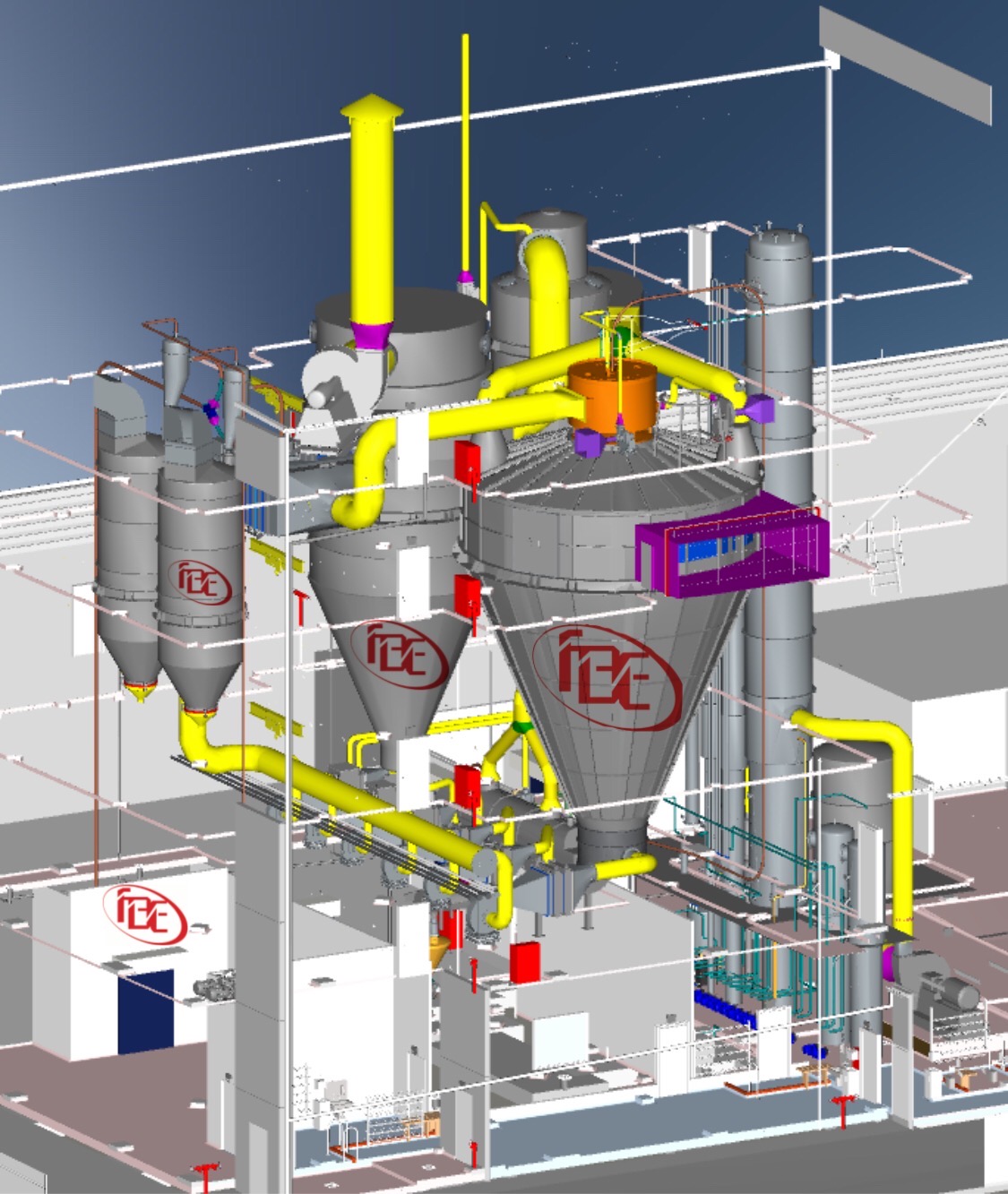
- Category: Dairy Equipment
- Keywords: MILK POWDER PLANT
- Manufacturer Name: FOOD AND BIOTECH ENGINEERS INDIA PVT. LTD.
- Packing size:
- Price: ₹1
Description
Transforming a liquid product into a dry powder requires removal of practically all water, the amount of which often exceeds the weight of the final product. During the water removal the processed product is undergoing deep changes of physical structure and appearance, starting with thin waterlike liquid and terminating with dry powder at the end of the process. Therefore, one single method of water removal cannot be optimal throughout the whole process, as also the product composition is different from one food product to another. In the food and dairy industry the following dehydration methods have been adopted: Evaporation: - concentrating milk of waterlike viscosity to a concentrate. Spray Drying: - transforming the concentrate into droplets and evaporating water from these droplets in order to get a powder which consists of dry particles. Vibrating Fluid Bed Drying: - The VIBRO-FLUIDIZER™ has been introduced for after drying and cooling, in order to improve the drying efficiency and improve the powder quality. Integrated Fluid Bed Drying: - improving the drying economy even further, and at the same time offering the possibility of drying difficult products. Integrated Belt Drying: - featuring a dryer with a moving belt at the bottom of the drying chamber, for products extremely difficult to dry by conventional spray drying. Each method should be adjusted to the properties of the processed material at each processing step. The more difficult the product, the more complex the plant.