BATTERY CAPACITY TESTER

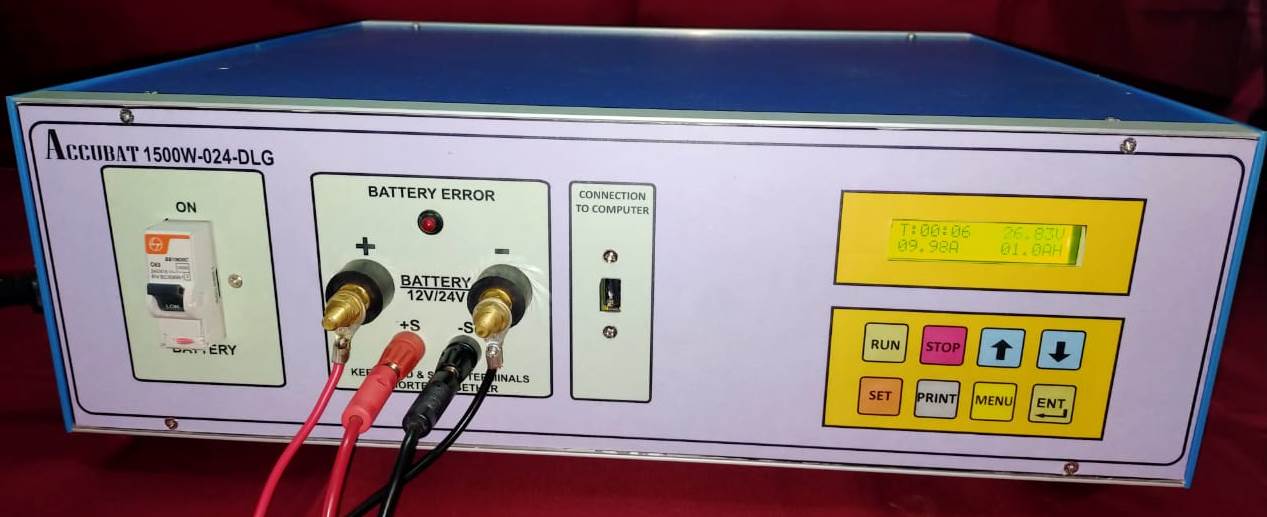
- Model No: MULTIPLE MODELS & RATINGS
- Category: Electronic Testing Equipment
- Keywords: BATTERY CAPACITY TESTER, BATTERY LOAD TESTER, SMART BATTERY TESTER
- Manufacturer Name:
- Packing size:
- Price: ₹115,000
Description
THE NEED TO USE BATTERY CAPACITY TESTER For battery power applications in many field such as aircraft batteries, electrical sub-stations, UPS, telecom installations, steel & similar continuous process based plants, marine installations etc. the batteries constitute a very important component for smooth operation & is also significantly expensive part in the overall cost. The AH capacity of a battery or a battery bank determines the back up or running time of an equipment or an installation. In case of all the types of maintenance batteries such as SLA, VRLA, Ni-Cd, Ni-MH, Li-ION & LIFEPO4 & wet Batteries such as lead-acid & nickel-cadmium, the manufacturer specifies the following parameters. ? Battery Voltage. ? AH capacity at ANY RATE OF DISCHARGE depending upon the type of battery. ? Back up time for discharge at various currents, up to specific end voltages. The backup time is specified. ? for CONSTANT CURRENT DISCHARGE which means that the battery current is constant irrespective of any change in its terminal voltage. ? From the graphs / data published by a battery manufacturer for a specific battery type & AH rating, battery AH capacity can be determined by discharging a FULLY CHARGED battery on a ACCUBAT Smart Battery Capacity Tester & recording the readings. HOW DOES A “BATTERY CAPACITY TESTER” WORK The battery capacity tester derives its operating supply from utility source (Mains input). The battery tester discharges the battery at a CONSTANT CURRENT settable through a keypad. The discharge continues till the battery end voltage is reached. At the end voltage, which is the lowest voltage till which a battery can be safely discharged, the discharge is terminated. The PRODUCT of the TIME INTERVAL between the START TIME & END TIME, and the BATTERY CURRENT is the AH CAPACITY delivered by the battery. The co-relation of this figure with the manufacturer’s published performance data gives the correct assessment of the battery’s condition. For example a brand new fully charged 12V/100AH SLA battery when discharged at a rate of C/10 i.e. 10A DC, should provide a back-up time of 10 hours approx. to an end voltage of 10.8V DC, as per manufacturer’s data. This specification can be verified by using ACCUBAT Smart Battery Capacity Tester. ACCUBAT Smart Battery Capacity Tester is compliant for use to undertake capacity test for batteries as per ? IS : 1651 1991 Ed.3, stationery batteries with tubular positive plates. ? IS : 13669 1992, mono-block stationery lead-acid batteries. ? IS : 15549 2005, stationery VRLA batteries. ? DGCA specifications for Nickel- Cadmium Batteries used in aircrafts. ? All other types of batteries such as Lithium-Ion, Lithium-Polymer, LiFePO4, Ni-MH etc. E